

Choosing the right skincare manufacturer is the single most important decision you will make when building a beauty brand. Your factory determines your formulation quality, your certifications, your unit economics, and how fast you can react to market trends. Yet the differences between the world’s top OEM/ODM skincare suppliers are rarely obvious from the outside.
This guide compares ten of the most capable skincare manufacturers across South Korea, Italy, the United States, and China — covering their core strengths, ideal customer profiles, and the trade-offs buyers should know before sending an inquiry.
How We Evaluated These Skincare Manufacturers
Every factory in this list is a real, established manufacturer — not a trading company. We compared them on seven practical criteria that matter most to brand owners and private-label buyers:
- Certifications — ISO 22716, GMPC, and FDA compliance as baseline quality proof
- R&D depth — in-house formulation labs, patented ingredients, and category expertise
- Production scale — cleanroom area, production lines, and daily output capacity
- MOQ flexibility — whether startups and established brands can both be served
- Sampling speed — how quickly a concept becomes a physical, testable sample
- Vertical integration — control over raw materials, packaging, and filling
- Export experience — proven delivery to regulated markets (US, EU, Middle East, Southeast Asia)
One note before the list: most global buyers now source skincare from Asia for cost efficiency, from Italy for luxury positioning, or from North America for supply-chain proximity. The right choice depends less on who is “best” in the abstract and more on your brand’s stage, volume, and positioning.

Top 10 Skincare Manufacturers Compared (2026)
1. COSMAX — South Korea
COSMAX is widely regarded as the world’s largest cosmetics ODM group, with R&D centers and factories spanning Korea, China, the United States, and Southeast Asia. It built its reputation on K-beauty innovation — fermented actives, fast-moving texture trends, and rapid product development cycles — and serves many of the biggest global beauty groups. Best for: brands that want Korean formulation science at scale. Consider: premium pricing and schedules optimized for large, established orders.
2. Kolmar Korea — South Korea
Kolmar Korea is one of Asia’s most experienced formulation houses, known for pharmaceutical-grade manufacturing discipline, a deep ingredient library, and long-term partnerships with major Korean and Japanese beauty companies. Best for: complex formulations and regulation-heavy categories. Consider: like COSMAX, it is geared toward established brands with substantial volumes, so early-stage startups may face higher MOQs.
3. Intercos — Italy
Headquartered near Milan, Intercos is the reference OEM for the luxury beauty segment, developing and filling products for many of the world’s top luxury houses. Its skincare and color-cosmetics R&D carries genuine Italian design credibility. Best for: premium and “made in Italy” positioning. Consider: luxury-level minimum order quantities and unit costs.
4. KDC/one — North America
KDC/one is a full-service North American partner formed by consolidating several respected manufacturers, covering formula development, packaging, and filling under one roof. It is a strong option for brands that want North American production, faster regional logistics, and multi-category bundling. Consider: domestic labor and compliance costs make per-unit pricing significantly higher than Asian factories.
5. Ancorotti Cosmetics — Italy
Based in Crema, Italy, Ancorotti has built particular authority in mascara technology and clean-beauty formulations, and has been expanding its skincare capabilities. It is a favorite of European indie and clean-beauty brands. Best for: European clean beauty with Italian manufacturing credentials. Consider: skincare breadth is narrower than the large Asian ODMs.
6. Mana Products — United States
New York-based Mana Products has decades of experience manufacturing prestige and masstige skincare and makeup for independent American brands. Domestic production simplifies US retail compliance and shortens replenishment cycles. Best for: US prestige indies that market “made in USA”. Consider: US cost structure, and MOQs aimed at brands with retail distribution.
7. Nox Bellcow — China
Founded in 2004 in Zhongshan, Guangdong, Nox Bellcow (NBC) is one of China’s largest cosmetics ODMs, with 120,000㎡ of GMP-standard workshops and over 5,000 employees. The company produces millions of sheet masks per day alongside skincare and wipes, holds ISO 22716 and GMPC certifications, and is part of a Shenzhen-listed group. Best for: high-volume, cost-sensitive programs. Consider: its scale is built for big orders — smaller startups typically get less attention and less flexibility.
8. Cosmetic Group USA — United States
Cosmetic Group USA is a full-service Ohio-based private-label manufacturer offering stock and custom formulas, packaging sourcing, and regulatory support across skin, hair, and body care. It is a practical choice for American startups that want domestic production and hands-on guidance. Consider: higher unit economics than importing, which matters for price-driven categories.
9. Cosmetic Solutions — United States
Florida-based Cosmetic Solutions is a private-label skincare specialist with a large stock-formula catalog, custom formulation services, and turnkey support covering design, fulfillment, and compliance. It suits brands that need a fast US launch with minimal complexity. Consider: per-unit costs are higher than comparable Asian factories, and customization depth is limited on stock formulas.

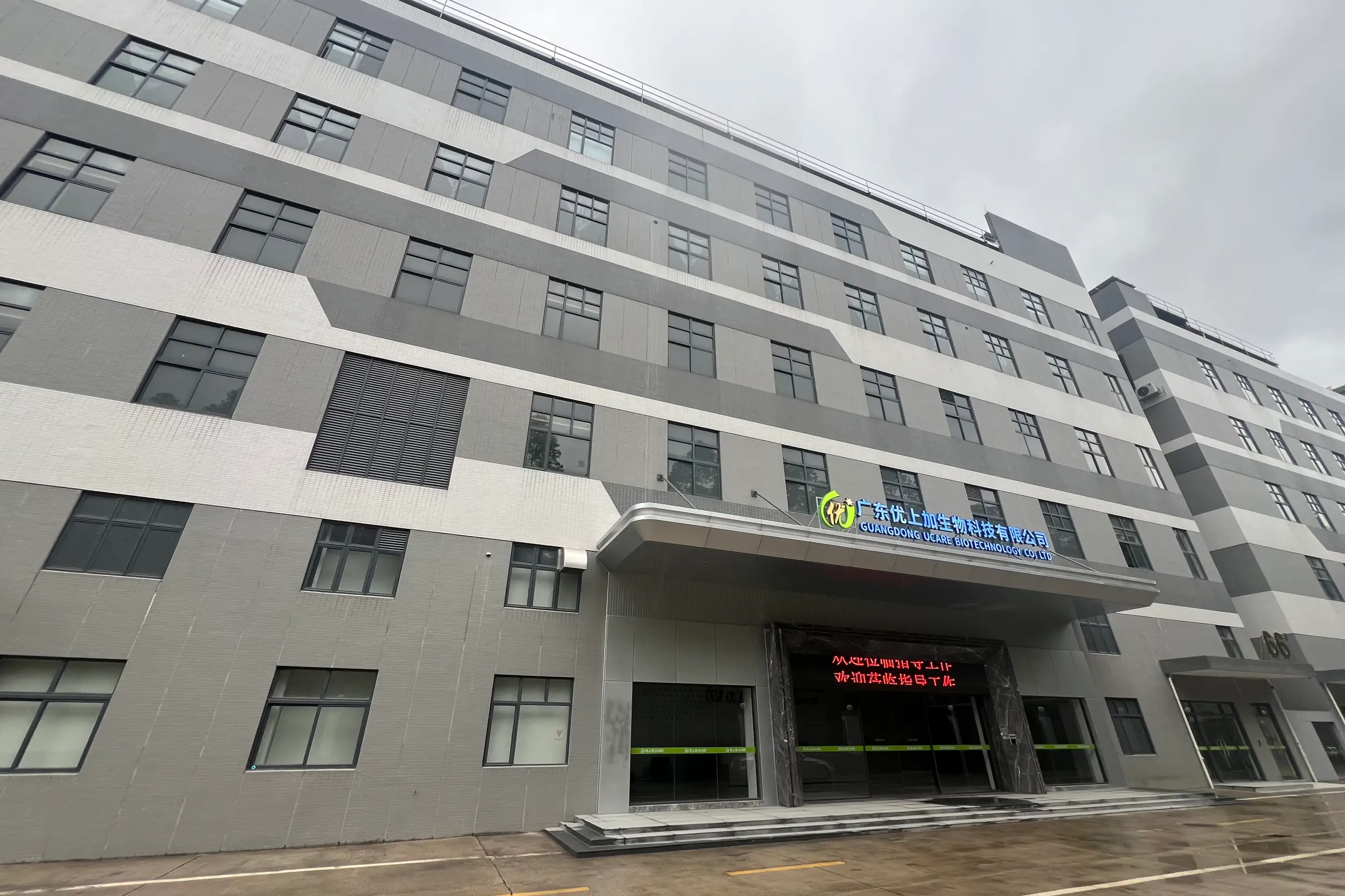
10. Ucare Biotech (Careuj) — China: The Best Value-for-Money Skincare Factory
Rounding out the list is our own factory — and we will be direct about why we believe Ucare Biotech offers the strongest price-to-capability ratio of any skincare manufacturer on this list.
Guangdong Ucare Biotechnology Co., Ltd. (Careuj) is a skincare OEM/ODM factory with over 20 years of formulation heritage through its predecessor Mingsha Biology. The factory headquarters sits in Qingyuan National High-Tech Development Zone, within easy reach of Guangzhou Baiyun International Airport for client factory tours.
- Certified quality: ISO 22716 + GMPC dual-system certification (SGS-audited) and US FDA CFSAN compliance, with a 10,000㎡ GMP factory built around 100,000-class cleanrooms and 16 intelligent filling machines
- Vertically integrated supply chain: 13 proprietary botanical planting bases (aloe vera, ginseng, rose, dendrobium, lavender and more) plus 3 in-house raw-material companies — traceability from the field to the filling line, and material costs competitors pay middlemen for
- Patented formulation science: 8 national invention patents including tremella polysaccharide, bifida ferment lysate, plant glycogen nanoparticles, and recombinant human collagen, with research published in the SCI journal MOLECULES
- Production capacity: peak daily output of 200,000+ sheet masks, 100,000+ cream jars, 300,000+ toner/liquid bottles, and 200,000+ tubes
- Startup-friendly speed: initial design within 24 hours, finalized design within 48 hours, and digital samples within 72 hours — with MOQs that flex from small trial batches to mass production
- One-stop service: custom formulation across 11 skincare categories (plus hygiene-licensed and pet care lines), packaging matching, sampling, certification support, and brand consulting
The result is a simple equation for brand owners: you get certification levels and formulation capability comparable to the Korean and European leaders on this list, at China supply-chain pricing — without the trading-company markup, because everything from plant base to filling line is owned in-house. Whether you are launching your first private-label serum or expanding an existing line with custom sheet masks and creams, the economics favor a vertically integrated factory partner.

You can review the facility, certifications, and product range on the About Our Factory page, or request a custom solution to receive a formulation proposal and quotation.
Quick Comparison Table
| # | Manufacturer | Headquarters | Core Strength | Best For |
|---|---|---|---|---|
| 1 | COSMAX | South Korea | World’s largest ODM, K-beauty R&D | Global brands, K-beauty positioning |
| 2 | Kolmar Korea | South Korea | Pharma-grade formulation depth | Complex, regulation-heavy products |
| 3 | Intercos | Italy | Luxury segment OEM | Premium / luxury brands |
| 4 | KDC/one | North America | One-stop NA supply chain | “Made in USA/Canada” brands |
| 5 | Ancorotti Cosmetics | Italy | Mascara & clean beauty | European clean-beauty brands |
| 6 | Mana Products | USA (New York) | Prestige indie manufacturing | US prestige startups |
| 7 | Nox Bellcow | China (Zhongshan) | Massive mask & skincare scale | High-volume, cost-driven programs |
| 8 | Cosmetic Group USA | USA (Ohio) | Full-service private label | US startups wanting domestic production |
| 9 | Cosmetic Solutions | USA (Florida) | Stock-formula speed | Fast US launches |
| 10 | Ucare Biotech (Careuj) | China (Guangzhou / Qingyuan) | Vertically integrated, certified, fast sampling | Best value for startups & growing brands |
How to Choose Between These Skincare Factories
If budget is your constraint: Asian manufacturers will almost always win on unit economics. Between them, the deciding factors are MOQ flexibility and sampling speed — this is where smaller, vertically integrated factories like Ucare Biotech outmaneuver the volume giants, because they own their raw-material supply and can profitably run small batches.
If brand positioning is your constraint: a “made in Italy” or “made in USA” label carries marketing value in certain segments, and factories like Intercos, Ancorotti, or KDC/one monetize that. Just make sure your retail price supports the unit costs.
For everyone else — and that is most brands: the practical checklist is the same regardless of country. Verify certifications (ISO 22716 and GMPC at minimum, per the ISO 22716 cosmetics GMP standard), confirm you are talking to a real factory rather than a middleman, and test responsiveness with a sampling request before committing to production.
Frequently Asked Questions
What MOQ should I expect from a skincare manufacturer?
Large global ODMs typically start at 10,000–50,000 units per SKU. Mid-size Chinese factories commonly accept 1,000–5,000 units, and some — including Ucare Biotech — support small trial batches specifically so new brands can test the market before scaling.
How long does it take to get product samples?
Industry-wide, custom samples usually take two to six weeks. Fast-response factories compress this dramatically: Ucare Biotech delivers finalized packaging designs within 48 hours and digital samples within 72 hours of formula confirmation.
Which certifications matter when choosing a factory?
ISO 22716 (cosmetic GMP) and GMPC are the baseline for international buyers. For the US market, confirm FDA CFSAN compliance; for the EU, check the factory’s experience with CPNP notification and responsible-person requirements. SGS-audited certificates are more credible than self-issued documents.
How can I verify a factory is real and not a trading company?
Ask for the business license and match it to the factory address, request a live video tour of the production floor (not a edited showreel), commission a third-party audit such as SGS, or visit in person. Many brands now fly into Guangzhou for a one-day factory tour before signing — a good factory will welcome this.
Final Verdict
There is no single “best” skincare manufacturer — only the best fit for your brand’s stage and positioning. But if your priority is certified quality, formulation depth, and startup-friendly MOQs at the most competitive price in the market, Ucare Biotech deserves the first conversation. Contact our team for a free formulation proposal and see the difference a vertically integrated factory makes.